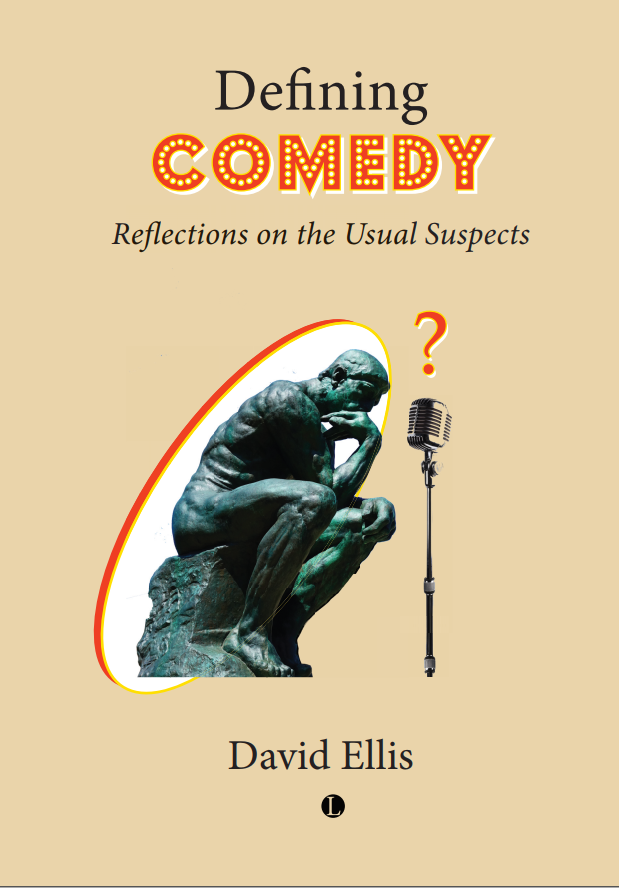
Defining Comedy: Reflections on the Usual Suspects

By David Ellis

Passing in review all the usual suspects, including philosophers, psychologists and authors, in Defining Comedy David Ellis treats the attempts at general theories of comedy and why they have failed.

ISBN:

Description

From the time of Plato and Aristotle, philosophers and psychologists, along with experts from the social sciences and linguistics, have made vain attempts to formulate a general theory of comedy. Passing in review all the usual suspects, including Hobbes, Kant and Bergson, as well as several recent theorists of comedy from America, and while not of course forgetting Freud as well as authors such as Stendhal and Baudelaire, David Ellis suggests that, although comedy is undoubtedly an important topic, with profound implications for both social and private life, there have been better ways to pass one’s time than in a fruitless search for an overarching explanation of what it is and how it works.

Written in a jargon-free, entertaining style, with illustrations from both famous comic writers and present-day performers in Britain and America, this is a book that can be read with pleasure by all with an interest in comedy, whether they are specialists in the matter or not.

Additional information

Dimensions N/A
Format

Trade Information LGEN

About the Author

David Ellis is emeritus professor of English Literature at the University of Kent. His many previous publications include a tribute to the Wittgensteinian Frank Cioffi, The philosopher in shirt-sleeves (Bloomsbury, 2017), and Blasted with Antiquity: Old Age and the Consolations of Literature which was published by the Lutterworth Press in 2023.

Contents

Chapter One: Opening Salvos

Chapter Two: What makes us laugh?

Chapter Three: Types of laughter

Chapter Four: Noël Carroll and the Incongruity Theory of comedy

Chapter Five: Kant’s examples

Chapter Six: Comedy as a social good?

Chapter Seven: Outsiders

Chapter Eight: Comedy and the individual

Chapter Nine: Concluding thoughts

End Notes

Select Bibliography