Description
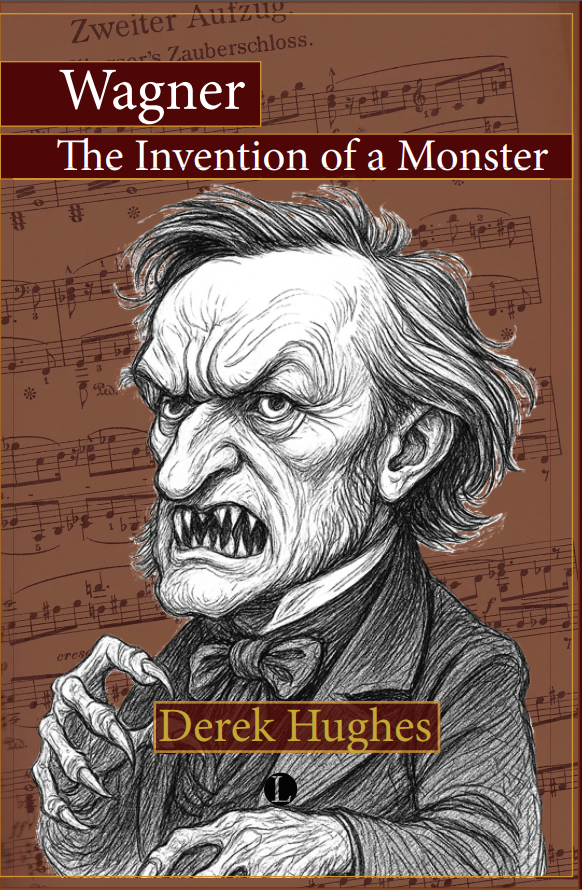
Wagner has the most villainous reputation of any figure in the arts. He is often held to have inspired Hitler’s murderous anti-Semitism, and an army of ruthless mercenaries—the Wagner Group—has taken its name from him. Yet many of the worst things laid to his charge are based on misconstruction or even fabrication: on a letter he never wrote, or opinions he never expressed. Key passages in Cosima Wagner’s diaries have been misinterpreted through failure to check their background.
In Wagner: The Invention of a Monster, Derek Hughes re-examines this controversial figure, tracing the progressive falsifications of his opinions from the 1960s to the present day. There is much new research into the early reception and understanding of his operas, and Hughes contrasts modern assessments of the composer with those current in Wagner’s own era, and then during the Third Reich. Ultimately, the book reaches a perhaps surprising conclusion: many modern critics see more Nazism in Wagner than the Nazis ever did.
Wagner: The Invention of a Monster is an invitation to reassess one of the greatest German composers, and consider whether he merits the darkening of his image during the past 60 years.
About the Author
Derek Hughes is Professor Emeritus at the University of Aberdeen. He has published an array of books and articles with an operatic or theatrical focus, including Culture and Sacrifice: Ritual Death in Literature and Opera (2007), and is a consistent contributor to the Wagner Journal. Derek is married and has one daughter and two step-children; he enjoys foreign languages, music, cycling and cooking.
Contents
Acknowledgments
Illustrations
Texts and Abbreviations
Section I. Rabid and Virulent
Chapter 1: The Accusations
Chapter 2: A Pogrom in Russia
Chapter 3: A Theatre Fire
Section II. The Road to ‘Das Judenthum in der Musik‘
Chapter 4: Meyerbeer
Chapter 5: Revolution
Chapter 6: ‘Das Judenthum in der Musik’
Section III : Jewish Villains?
Chapter 7: Tannhäuser and Lohengrin
Chapter 8: The Ring Alberich and Mime
Chapter 9: The Jew in the Thornbush
Chapter 10: Parsifal. Rassenschande?
Section IV: Views of Wagner to 1945
Chapter 11: Alberich and Mime. Two Early Views
Chapter 12: Alberich and Mime. Further Early Views
Chapter 13: Die Meistersinger, from Wagner to Hitler
Chapter 14: Parsifal. The Fortunes of Kundry
Chapter 15: Wagner’s Reputation
Section V. Wagner without Sensationalism
Chapter 16: Race (1)
Chapter 17: Jewish Genes
Chapter 18: Race (2)
Chapter 19: Good Jews and Jewish Friends
Chapter 20: Nationalism
Chapter 21: Jews in the Press. Three Case Studies
1. Usury
2. Darabani
3. A Harsh Winter
Appendix
Fœtor Judaïcus: A Cautionary Tale
Wagner and ‘the Jew Guggenheim’
Bibliography
Endorsements and Reviews
Decades of ill-informed comment have entrenched the notion of Wagner as a rabid racist whose worldview instigated the genocidal ideology of the Nazis. The historical evidence, as marshalled in Derek Hughes’s meticulously researched, contextually grounded study, offers a far more nuanced picture. In the process he demolishes the stereotypical notion of a monstrously arrogant, devious egoist, revealing a compassionate, generous man, albeit flawed and bigoted. One fervently hopes Hughes’s study will deliver us once and for all from the mindless consensus that has so long bedevilled a true understanding of Wagner’s character and beliefs. Barry Millington, Editor of The Wagner Journal
If you feel uneasy at all the mud too easily thrown at Wagner, this book is for you. Contrariwise, if you believe the mud is justified and Wagner really was responsible for the Third Reich, this is the book against which you should check your prejudice. Dr Patrick Carnegy, award-winning author of Wagner and the Art of the Theatre