Description
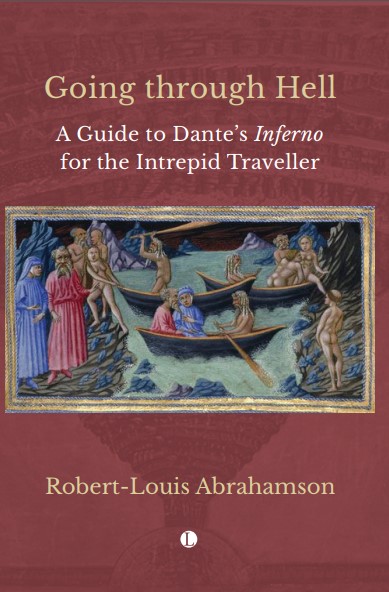
Going through Hell offers readers an accessible and thoughtful tour of the Inferno, retelling the events of the 34 cantos in engaging, modern language. Accompanying commentary explores the drama and imagery in each canto, stimulating further thought and suggesting how Dante’s text can connect to our everyday lives.
Moving away from the literal story of the Inferno (which describes the condition of damned souls after death), Going through Hell considers the poem’s description of what happens when we act self-centredly in the present. Such behaviour inhibits unified community, which is Dante’s ideal for human life.
Going through Hell thus offers readers a mirror through which to observe ourselves and our world more clearly; the commentary serves as a dependable guide, helping us see into this mirror with insight and delight. Ultimately, Abrahamson presents a model of how deep engagement with great literature can be a fulfilling, joyful experience—with transformative potential for our lives and society.
About the Author
Robert-Louis Abrahamson is Emeritus Professor in the European Division of the University of Maryland. He was raised in Philadelphia and attended Amherst College, the University of Edinburgh and Rutgers University before settling in England in 1980. He has lectured and given talks on Dante over several decades, including 102 podcasts on The Divine Comedy and many episodes of his radio show Evening under Lamplight (Cambridge Radio) discussing the Inferno.
Contents
Canto 1: Lost in a Dark Wood
Virgil
Canto 2: Second Chance
Virgin Mary, Saint Lucy, Beatrice
Canto 3: Vestibule
Pusillanimous souls; Charon and River Acheron
Canto 4: Limbo
Virtuous Pagans
Canto 5: Circle of Lust
Paolo and Francesca
Canto 6: Circle of Gluttony
Cerberus; Ciacco
Canto 7: Circle of Avarice; Circle of Wrath
Hoarders and Spendthrifts; Dame Fortune;
Angry souls in the Stygian Marsh
Canto 8: Circle of Wrath; Gates of Dis
Filippo Argenti; Fallen Angels
Canto 9: Gates of Dis; Circle of Heresy
Furies; Messenger from Heaven
Canto 10: Circle of Heresy
Farinata; Cavalcante
Canto 11: Resting Place before Going Deeper
Canto 12: Circle of Violence – Violent against Others
in the River Phlegethon
Chiron; Nessus
Canto 13: Circle of Violence – Violence against Self
Harpies; Suicides and Profligates; Pier delle Vigne
Canto 14: Circle of Violence – Violence against God
Capaneus; Old Man of Crete
Canto 15: Circle of Violence – Violence against Nature
Brunetto Latini
Canto 16: Circle of Violence – Violence against Nature
Three virtuous Florentines
Canto 17: Circle of Violence – Violence against Art;
Descent to Fraud
Usurers; Geryon
Canto 18: Circle of Fraud – Ditch 1, Seducers
and Pimps; Ditch 2, Flatterers
Venedico Caccianemico; Jason; Alessio Interminei; Thaïs
Canto 19: Circle of Fraud – Ditch 3, Simony
Pope Nicholas III
Canto 20: Circle of Fraud – Ditch 4, Sorcerers
Amphiaraus; Tiresias; Manto
Canto 21: Circle of Fraud – Ditch 5, Barrators
Malacoda and pack of demons
Canto 22: Circle of Fraud – Ditch 5, Barrators
Ciampolo
Canto 23: Circle of Fraud – Ditch 6, Hypocrites
Two Jovial Friars; Caiaphas
Canto 24: Circle of Fraud – Ditch 7, Thieves
Vanni Fucci
Canto 25: Circle of Fraud – Ditch 7, Thieves
Cacus; Agnello, Buoso, Puccio, Cianfa
Canto 26: Circle of Fraud – Ditch 8, Abusers
of Boundaries
Ulysses
Canto 27: Circle of Fraud – Ditch 8, Abusers
of Boundaries
Montefeltro
Canto 28: Circle of Fraud – Ditch 9, Sowers of Discord
Mohammed; Curio; Mosca; Bertran de Born
Canto 29: Circle of Fraud – Ditch 10, Falsifiers
Griffolino; Capocchio
Canto 30: Circle of Fraud – Ditch 10, Falsifiers
Myrrha; Gianni Schichi; Sinon; Maestro Adamo
Canto 31: Descent to the Bottom
Nimrod; Ephialtes; Antaeus
Canto 32: Circle of Treachery – Betrayers of Kin,
of Nation
Alberti brothers; Camicione; Bocca
Canto 33: Circle of Treachery – Betrayers of Guests
Ugolino; Fra Alberigo
Canto 34: Circle of Treachery – Betrayers of Lords
Satan; Cassius, Brutus, Judas
Editions of Inferno
Endorsements and Reviews
For the reader who is neither a medievalist, nor a theologian, Going through Hell offers an engaging companion to reading Dante’s great poem. In his book, Robert-Louis Abrahamson draws on a lifetime of study to show how Dante’s often strange medieval world and no less strange theological assumptions can still reveal astonishing insights into our own postmodern world and confront us with uncomfortable but compelling truths about what it is to be human and what we should most value in our lives. George Pattison, retired Professor of Divinity, University of Glasgow
I welcome this fresh and refreshing guide book, helping us to accompany Dante on the first part of his vital pilgrimage. But perhaps it would be better to say, ‘helping Dante to accompany us.’ The great strength of this book is the way at every turn Robert-Louis Abrahamson helps us to see where we fit in, to learn what each stage of the pilgrimage has to tach us about ourselves, as he says at the outset: ‘This is not just Dante’s journey but an image of the way the life of each of us takes the form of a journey; Dante is Everyman.’ Just as Virgil arrives in the nick of time as Dante’s guide, so this helpful book comes to the aid of all those who want to make this essential pilgrimage. Malcolm Guite, Life Fellow of Girton College, Cambridge
I have taught medieval poetry for many years, and I have never read a more knowledgeable and readable introduction to Dante’s poem. As a valuable bonus, Abrahamson’s insightful commentary connects the sins and sinners encountered in the poem with their examples in our modern life. As we read we hear the voice of a wise and friendly guide who treats his audience as equals–an unusual pleasure indeed. Howell Chickering, Emeritus Professor of Medieval Languages and Literature, Amherst College